 donald
Poor lighting kills property listings before buyers even schedule a viewing. Natural light photographs beautifully at 10 AM but creates harsh shadows by 2 PM, forcing photographers into expensive reshoot schedules or settling for dim, uninviting images that reduce perceived property value by up to 10%. AI virtual lighting technology solves this problem and kickstart your new interior design effortlessly thanks to all the new stuff coming to the market right now in 2026. by intelligently analyzing room geometry, existing light sources, and surface materials to generate photorealistic lighting enhancements in minutes rather than hours of manual editing.
This technology goes far beyond simple brightness adjustments. Advanced algorithms simulate how natural light would enter through windows at optimal times, cast realistic shadows across architectural features, and adjust color temperature to match golden hour warmth or crisp daylight clarity. Real estate professionals now enhance twilight exteriors, brighten basement spaces, and correct unflattering overhead lighting without hiring photography crews for multiple visits.
The commercial implications are substantial. Properties with professionally lit images receive 47% more online engagement and sell 32% faster than those with standard photography. However, not all AI lighting solutions deliver convincing results. Low-quality tools produce telltale halos, unrealistic shadow patterns, and inconsistent color rendering that sophisticated buyers immediately recognize as artificial.
Understanding which AI lighting platforms provide professional-grade output requires evaluating rendering accuracy, shadow physics, and integration capabilities with existing staging workflows. This guide examines the technology’s capabilities, limitations, and selection criteria to help you determine whether AI virtual lighting meets your professional standards.
What AI Virtual Lighting Actually Does in Real Estate Staging
The Technology Behind Virtual Lighting Enhancement
AI virtual lighting enhancement operates by analyzing multiple layers of photographic information to create convincingly realistic illumination. The technology begins by mapping existing light sources in a room—identifying windows, fixtures, and natural brightness patterns. The AI then examines shadows, their direction, and intensity to understand the original lighting conditions and time of day captured in the photograph.
One key technique is ray tracing, which simulates how light travels and bounces off surfaces in real life. Think of it as the AI calculating the path of individual light beams as they reflect from walls, furniture, and floors. This creates authentic highlights and gradients that match how our eyes naturally perceive illuminated spaces.
Another essential component is ambient occlusion, a method that calculates how much ambient light reaches different areas of a room. This technology determines which corners, crevices, and spaces behind furniture should appear darker because they’re blocked from receiving direct or reflected light. Without this calculation, added lighting would look flat and unrealistic.
The AI also considers room dimensions and spatial relationships. By understanding ceiling height, window placement, and furniture proximity, the system adjusts light intensity and spread appropriately. A pendant light in a room with high ceilings will cast different shadows than one in a compact space, and sophisticated AI accounts for these architectural nuances.
This combination of analytical processes allows virtual lighting to integrate seamlessly with existing photographs, producing results that convince potential buyers while maintaining photographic authenticity.
Virtual Lighting vs. Traditional Photo Editing
Traditional photo editing requires skilled professionals who manually adjust brightness, shadows, highlights, and color temperature in programs like Photoshop—a process that can take 30 minutes to several hours per image depending on complexity. AI virtual lighting technology streamlines this workflow dramatically, delivering professional-quality results in minutes rather than hours.
The key advantage lies in how AI understands light behavior. Unlike manual editing where you’re simply brightening pixels, AI-powered tools simulate actual light physics—calculating how natural or artificial light would realistically interact with surfaces, textures, and room dimensions. This creates more convincing results, especially in challenging scenarios like balancing window light with interior fixtures or eliminating harsh shadows.
Traditional Photoshop work requires expertise similar to professional product photography, where understanding light placement and quality is essential. While skilled editors can produce excellent outcomes, consistency across multiple properties becomes difficult and expensive. AI virtual lighting maintains uniform quality across entire listings while reducing costs by up to 70 percent compared to hiring professional editors.
The technology excels at replicating specific lighting conditions—golden hour warmth, bright midday clarity, or sophisticated evening ambiance—without requiring actual photo reshoots. However, for highly customized artistic effects or correcting severe lighting defects, traditional editing may still offer more creative control.
Why Lighting Makes or Breaks Virtual Staging Results
The Shadow Problem in Virtual Furniture
One of the most challenging aspects of virtual staging is creating believable shadows that ground digitally inserted furniture in the physical space. Without proper shadows, staged furniture appears to float above the floor, immediately signaling to viewers that the space isn’t real. This “floating furniture” effect undermines credibility and can lead potential buyers to question the property’s actual appeal.
AI virtual lighting technology addresses this issue by analyzing the existing light sources in a room—including natural light from windows, overhead fixtures, and ambient lighting conditions. The system then calculates how shadows should fall based on the position, intensity, and direction of these light sources. Modern AI algorithms generate shadows with appropriate softness, length, and opacity, matching the time of day and lighting conditions captured in the original photograph.
The technology also accounts for secondary lighting effects, such as light bouncing off walls and reflected illumination from floors. This creates natural-looking contact shadows where furniture meets the floor and subtle gradations that mirror how light behaves in real environments. For real estate professionals, this means staged rooms maintain their authenticity and help potential buyers envision themselves in the space without the distraction of obvious digital manipulation.
Matching Light Temperature and Direction
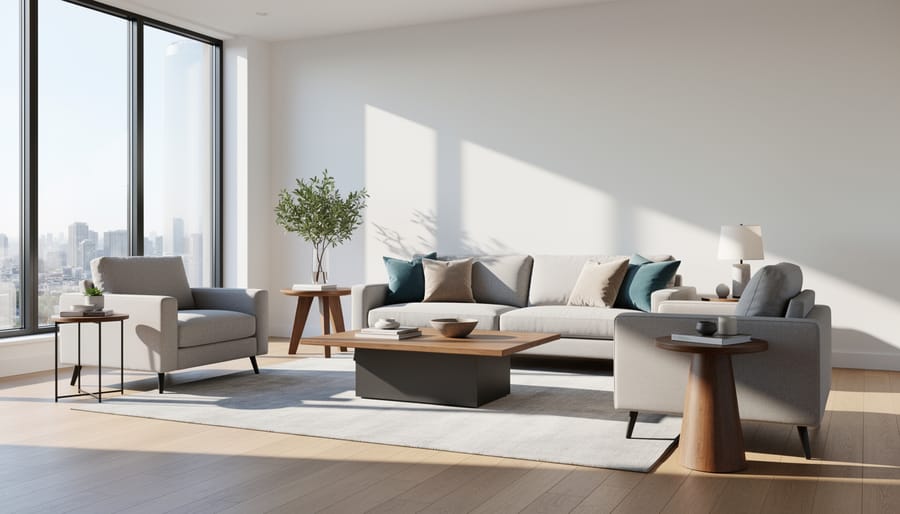
One of the most impressive capabilities of AI virtual lighting technology is its ability to analyze and replicate the existing light characteristics within a room. The software examines the natural and artificial lighting already present in the photograph, identifying whether the space features warm tones (typically 2700K-3000K, creating cozy, inviting atmospheres) or cool tones (4000K-5000K, producing crisp, modern feels). This light temperature matching ensures that any virtually added fixtures blend seamlessly with the room’s existing ambiance.
Beyond color temperature, advanced AI algorithms detect directional lighting cues such as window placement, shadow patterns, and time-of-day indicators. If sunlight streams through west-facing windows creating afternoon warmth, the AI ensures virtual lamps cast shadows and emit light that complement this natural directionality. This attention to detail prevents the artificial appearance that occurs when lighting doesn’t align with environmental factors. The result is staged images where virtual and real elements are virtually indistinguishable, maintaining the authenticity that buyers and renters expect while showcasing the property’s full potential.
Practical Applications: Where AI Virtual Lighting Shines
Brightening Dark Spaces Without Overexposure
Dim, poorly-lit rooms present one of the biggest challenges in real estate photography—properties appear smaller, less inviting, and can obscure attractive features. AI virtual lighting technology addresses this by intelligently enhancing illumination without the telltale signs of digital manipulation. Modern AI algorithms analyze the existing light sources, shadows, and ambient conditions in a photograph, then add virtual lighting fixtures that integrate seamlessly with the scene.
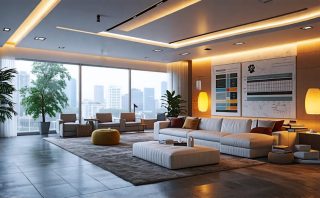
The technology works by understanding proper lighting levels for different room types and purposes. It can strategically place recessed ceiling lights, add table lamps to dark corners, or amplify window light to create balanced, natural-looking illumination. The key advantage is maintaining photorealism—the AI accounts for how light would naturally bounce off surfaces, create appropriate shadows, and interact with existing colors and textures.
This approach prevents the washed-out, overexposed appearance that results from simply increasing brightness filters. Instead, prospective buyers see spaces that look naturally well-lit and welcoming, accurately representing how the room would appear with proper lighting installed. For real estate professionals, this means transforming challenging properties into marketable listings without expensive physical staging or professional lighting equipment.
Adding Accent and Task Lighting to Highlight Features
Accent and task lighting transforms ordinary spaces into visually compelling environments that capture buyer attention during virtual staging. AI-powered tools now allow real estate professionals to add strategically placed lighting fixtures that highlight a property’s best features without the expense of physical installation.
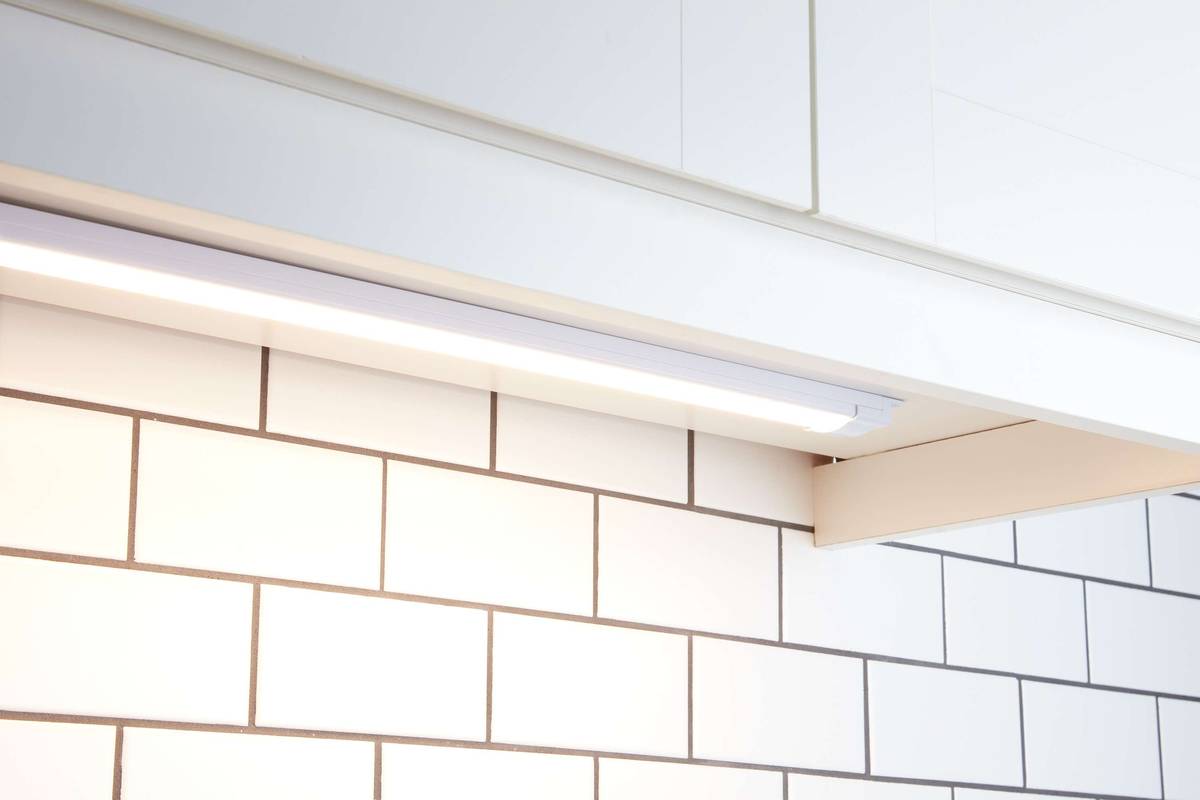
Virtual pendant lights suspended over kitchen islands create focal points while demonstrating the space’s functionality. These fixtures draw the eye downward, emphasizing countertop surfaces and the room’s gathering potential. Similarly, adding under-cabinet lighting in kitchen renderings brightens work surfaces and adds depth to cabinetry, making the space appear more upscale and professionally designed.
Track lighting proves particularly effective for showcasing artwork or architectural elements like exposed brick, crown molding, or textured accent walls. AI staging software can position these fixtures to cast realistic directional light that creates subtle shadows and dimension, helping buyers visualize how their own collections might be displayed.
The key is using accent lighting purposefully rather than excessively. Each added light source should serve a clear function, whether illuminating a reading nook, brightening a workspace, or emphasizing unique architectural characteristics. This targeted approach creates visual interest while maintaining the authentic, livable feel that resonates with potential buyers.

Evening and Twilight Staging Transformations
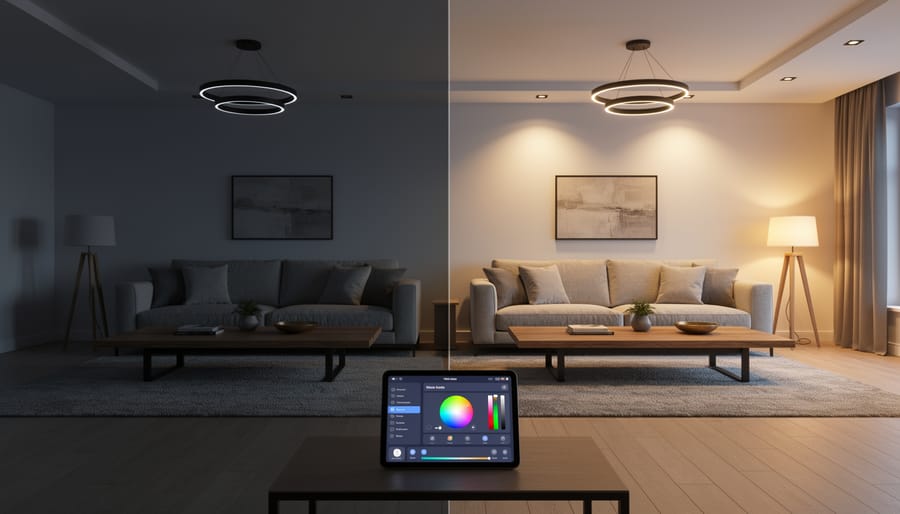
Evening and twilight staging represents one of the most compelling applications of AI virtual lighting technology. By digitally adding warm interior illumination to properties photographed at dusk, agents can showcase homes with an emotional appeal that daytime photos simply cannot achieve. This technique creates inviting scenes where softly lit windows glow against deepening skies, suggesting comfort and livability to potential buyers.
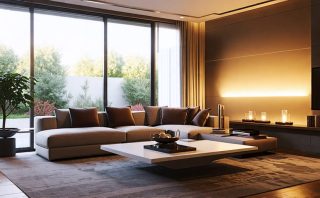
Modern AI lighting algorithms can realistically simulate various light sources—pendant fixtures over kitchen islands, table lamps in living rooms, or recessed lighting highlighting architectural features. The technology accounts for light intensity, color temperature (typically warm 2700-3000K tones for residential spaces), and natural reflection patterns on surrounding surfaces. This creates authentic-looking scenes that help buyers envision themselves relaxing in the space after a long day.
The transformation is particularly effective for vacant properties, where added virtual lighting brings life to empty rooms without the expense of physical staging and professional twilight photography sessions.
Cost and Time Benefits Compared to Physical Staging Lighting
The financial case for AI virtual lighting becomes immediately apparent when you examine traditional staging costs. Physical staging lighting typically requires rental fees ranging from $200 to $800 per property, depending on the number of fixtures needed to properly illuminate each room. Professional installation adds another $150 to $400 per session, as experienced technicians must position equipment, run cables safely, and ensure optimal illumination angles. These costs multiply quickly when staging multiple properties or requiring repeated sessions for different photography shoots.
Beyond the upfront expenses, physical lighting demands significant time investment. Coordinating rental schedules, arranging installation appointments, and conducting the actual setup typically consumes 3-5 hours per property. For real estate professionals working with tight listing deadlines, this timeline can delay market entry by several days or even weeks when scheduling conflicts arise.
AI virtual lighting solutions eliminate these barriers entirely. Most professional virtual staging platforms charge between $25 to $75 per image for comprehensive editing that includes lighting enhancement. There are no rental fees, no installation costs, and no electricity charges to consider. The entire process happens digitally after initial photography, requiring only 24-48 hours for professional delivery in most cases.
The time-to-market advantage proves especially valuable in competitive real estate markets. Properties can be photographed with basic ambient lighting, then enhanced virtually within days rather than weeks. This streamlined workflow means listings reach potential buyers faster, potentially reducing holding costs and capturing buyer interest while market conditions remain favorable. For real estate professionals managing multiple properties simultaneously, the scalability of virtual lighting becomes a significant operational advantage, as one photographer can capture multiple properties in a single day without coordinating complex lighting equipment across locations.
Choosing AI Virtual Staging Platforms With Superior Lighting Capabilities
Key Features to Look For
When evaluating AI virtual lighting software for real estate staging, prioritize these essential capabilities to ensure professional results that mirror authentic interior lighting design principles.
Automatic shadow generation is fundamental. The software should create realistic shadows that correspond accurately to the virtual light sources placed in the scene. Shadows should appear naturally soft or sharp depending on the light type and distance, just as they would in a physically lit space.
Light temperature matching allows you to adjust the color temperature of virtual fixtures to complement existing lighting in the property photographs. Look for software offering a range from warm (2700K-3000K) to cool (5000K-6500K) temperatures, ensuring seamless integration with natural window light and existing fixtures.
Multiple fixture options provide versatility for different staging scenarios. Quality platforms include chandeliers, recessed lighting, table lamps, floor lamps, and pendant lights with various styles to match diverse property aesthetics.
Ambient lighting control enables you to adjust overall room brightness and atmosphere independently from specific fixtures. This feature ensures the entire space feels cohesively lit rather than showing isolated bright spots.
Ray tracing quality determines how realistically light behaves in the virtual environment. Advanced ray tracing simulates how light bounces off surfaces, creating authentic reflections and indirect illumination. While computationally intensive, this technology produces the most convincing results for high-end property marketing where visual credibility is paramount.
Quality Indicators and Red Flags
When evaluating AI virtual lighting samples, watch for several telltale signs of poor execution. Unrealistic shadows are perhaps the most obvious red flag—look for shadows that fall in different directions within the same room, which indicates inconsistent light source placement. Quality AI lighting should create shadows that naturally correspond to visible light fixtures or windows.
Color temperature mismatches represent another common issue. A room shouldn’t have warm, yellow-toned lighting from ceiling fixtures combined with cool, blue-toned natural light that appears unnaturally bright. Professional work maintains consistent color harmony throughout the space, with smooth transitions between different light sources.
Pay close attention to light reflections and how illumination interacts with surfaces. Poor compositing often reveals itself through light that doesn’t properly reflect off glossy floors, mirrors, or metallic fixtures. The light should naturally bounce and diffuse according to material properties—matte surfaces should absorb light differently than reflective ones.
Edge halos around furniture or architectural features indicate sloppy masking work, where virtual lighting wasn’t properly integrated with existing elements. Similarly, watch for overly bright hotspots or unnaturally dark corners that wouldn’t occur with proper light distribution. These indicators suggest rushed work or inadequate understanding of lighting principles, which can undermine the credibility of your property presentation.
Limitations and When Physical Lighting Still Wins
While AI virtual lighting has made remarkable strides, it’s important to recognize where the technology currently has limitations. Understanding these boundaries helps you make informed decisions about when to use virtual solutions versus traditional physical staging.
AI virtual lighting can struggle with highly complex architectural features like intricate crown molding, textured surfaces, or spaces with multiple reflective materials. The algorithms may not perfectly replicate how light bounces off various surfaces simultaneously, potentially creating subtle inconsistencies that discerning buyers might notice. In luxury properties where authenticity is paramount, these small discrepancies can impact perceived value.
Another consideration is emotional connection. While virtual lighting can dramatically improve a listing photo, nothing replaces the experience of walking through a beautifully lit physical space. For high-end properties or situations where in-person showings are the primary sales tool, investing in quality physical lighting creates an irreplaceable atmosphere that helps buyers envision themselves in the home.
Certain property types also present challenges. Historic homes with unique architectural details, properties with unusual layouts, or spaces featuring custom lighting installations may benefit more from professional photography with actual lighting equipment. The nuanced interplay of light in these specialized environments often exceeds current AI capabilities.
Additionally, if your target market includes buyers who prioritize seeing properties exactly as they are, virtual enhancements of any kind including lighting adjustments might not align with your transparency goals. In these cases, accurate representation through skilled photography with real lighting remains the gold standard.
AI virtual lighting has evolved from an experimental novelty into a professional-grade solution that deserves serious consideration in your real estate staging workflow. The technology now delivers photorealistic results at a fraction of traditional staging costs, making enhanced property presentations accessible to agents working across all price points. When properly implemented, AI-generated lighting can transform dim, unappealing spaces into warm, inviting environments that capture buyer attention and accelerate sales timelines.
For optimal results, integrate AI virtual lighting selectively rather than universally. Use it to enhance naturally challenging spaces like basements, north-facing rooms, or properties photographed during overcast conditions. Maintain quality standards by working with providers who understand lighting principles—proper shadow directionality, realistic color temperature consistency, and appropriate intensity levels remain non-negotiable even when using automated tools.
As you evaluate solutions, prioritize platforms offering customization controls and quality assurance processes. The most effective approach combines AI efficiency with human oversight, ensuring every enhanced image meets professional presentation standards. When used thoughtfully alongside traditional staging techniques, virtual lighting becomes a powerful complement to your marketing toolkit, expanding your creative possibilities while respecting budget constraints. This technology isn’t replacing skilled staging professionals—it’s empowering them with capabilities that simply weren’t feasible before.