 donald
Innovative lighting combines advanced LED technology, smart controls, and sustainable design to reduce energy costs by up to 90% while offering unprecedented control over ambiance, color, and timing. Modern systems integrate tunable white and RGB spectrum capabilities, wireless dimming, and automation that responds to occupancy, daylight levels, or personal schedules. The practical benefit is clear: businesses cut operating expenses while homeowners gain flexible lighting that adapts throughout the day, and both enjoy fixtures with lifespans exceeding 50,000 hours.
The shift toward intelligent lighting solutions reflects broader lighting trends that prioritize efficiency, wellness, and customization. Human-centric lighting, for example, mimics natural daylight patterns to support circadian rhythms and improve productivity in offices or concentration at home. Architectural-grade fixtures now deliver museum-quality color rendering while consuming a fraction of the power traditional incandescent or halogen sources required.
Implementation ranges from straightforward retrofit projects to comprehensive system upgrades. Simple updates include replacing outdated bulbs with smart LED equivalents that connect to voice assistants or smartphone apps. More ambitious installations integrate lighting with building management systems, enabling centralized control across multiple zones and automatic adjustments based on time or activity.
The challenge isn’t finding innovative options; it’s choosing the right combination of technology, compatibility, and budget for your specific needs. Professional consultation ensures your investment delivers measurable returns, whether you’re upgrading a single room or outfitting an entire commercial facility.
What Makes Lighting & Electric Solutions ‘Innovative’ in 2026
Innovation in lighting has shifted from simply producing brighter or more efficient bulbs to creating intelligent, responsive systems that fundamentally change how we experience interior spaces. In 2026, what separates innovative solutions from traditional installations is their ability to adapt, communicate, and enhance human wellbeing while minimizing energy consumption.
The defining characteristics of modern innovative lighting encompass several interconnected qualities:
- Smart Integration
- The seamless connection of lighting fixtures with home automation systems, allowing centralized control and coordination with other environmental systems like HVAC and security.
- Circadian Lighting
- Technology that automatically adjusts color temperature and intensity throughout the day to support natural biological rhythms and promote better sleep, focus, and overall health.
- Adaptive Controls
- Systems that learn from user behavior and environmental conditions to automatically optimize lighting levels, reducing energy waste while maintaining comfort and functionality.
- Energy Harvesting
- Advanced power management techniques that capture and redirect wasted energy, often paired with ultra-efficient LEDs to achieve minimal environmental impact.
- IoT Connectivity
- The integration of lighting into the broader Internet of Things ecosystem, enabling remote management, data collection, and coordination with sensors and other smart devices.
Beyond these technical capabilities, innovative lighting distinguishes itself through its responsiveness to specific contexts. A truly advanced system recognizes occupancy patterns, adjusts to available natural light, and modifies output based on the activity taking place in each zone. This level of intelligence transforms lighting from a static utility into a dynamic component of the built environment.
The practical impact extends across residential, commercial, and hospitality settings. Homeowners gain granular control over ambiance and energy costs. Office managers create workspaces that boost productivity and employee satisfaction. Retailers craft shopping experiences that highlight products while reducing operational expenses. What ties these applications together is the fundamental shift from one-size-fits-all illumination to personalized, context-aware lighting that serves both functional and experiential goals.
Smart Integration and Control Systems
Wireless Protocols and Connectivity Standards
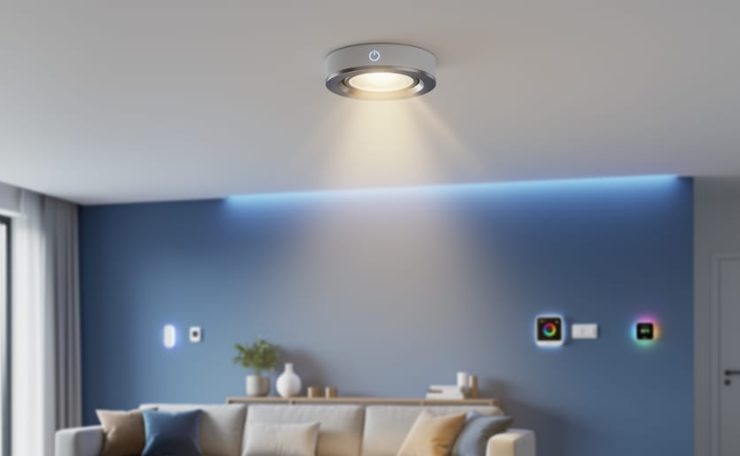
Modern smart lighting systems rely on several wireless protocols, each with distinct characteristics that affect performance, compatibility, and user experience. Understanding these technologies helps you make informed decisions when building or expanding your connected lighting ecosystem.
Zigbee operates on a mesh network where each device can relay signals to others, creating robust coverage throughout your space. This protocol excels in large installations with dozens of fixtures because the network strengthens as you add more devices. Zigbee draws minimal power, making it ideal for battery-operated sensors and switches, and it uses dedicated frequency bands that avoid congestion from Wi-Fi traffic.
Z-Wave functions similarly with mesh networking but operates on a different frequency band, which further reduces interference potential. Z-Wave devices typically offer slightly longer range per node compared to Zigbee, though the ecosystem includes fewer lighting-specific products. Both Zigbee and Z-Wave require a central hub to communicate with your smartphone or voice assistants.
Wi-Fi-based lighting connects directly to your existing router without additional hubs, simplifying initial setup. This approach works well for standalone fixtures or small installations but can strain your network bandwidth when controlling many lights simultaneously. Wi-Fi fixtures consume more power than mesh alternatives, which matters for battery-powered devices.
Bluetooth provides the simplest installation for individual fixtures or room-level control through your smartphone. Recent Bluetooth mesh implementations now support whole-home systems with improved range and device counts, though they typically remain limited compared to Zigbee or Z-Wave networks.
The protocol you choose should align with your installation scale, existing smart home infrastructure, and long-term expansion plans.
Creating Personalized Lighting Scenes
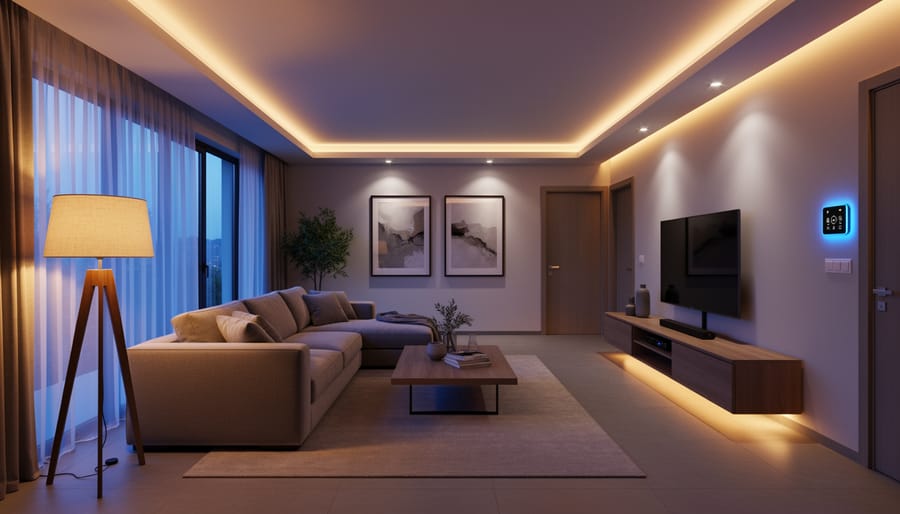
Smart lighting scenes transform how you interact with your home by programming multiple fixtures to respond as a unified system. A “morning routine” scene might gradually increase brightness from 20% to full intensity over fifteen minutes while shifting color temperature from warm 2700K to energizing 4000K. An “entertainment mode” could dim overhead lights to 10% while activating accent lighting behind your television at 40% intensity, eliminating screen glare without plunging the room into darkness.
Most control apps organize scenes by room and activity type. You might create a “dinner party” configuration that sets dining room pendants to 70% brightness with warm 2400K glow, activates under-cabinet kitchen lighting at 30% for ambient effect, and dims adjacent hallway fixtures to 15% for subtle wayfinding. A “work from home” scene in your office might deliver 100% brightness at 5000K for maximum alertness during video calls, then automatically transition to 60% at 3500K for afternoon reading sessions.
The real power emerges when you schedule scenes to activate automatically or trigger them through voice commands, motion sensors, or geofencing. This creates spaces that adapt without constant manual adjustment, responding seamlessly to your daily patterns and special occasions alike.
Human-Centric and Circadian Lighting Design
Tunable White Technology
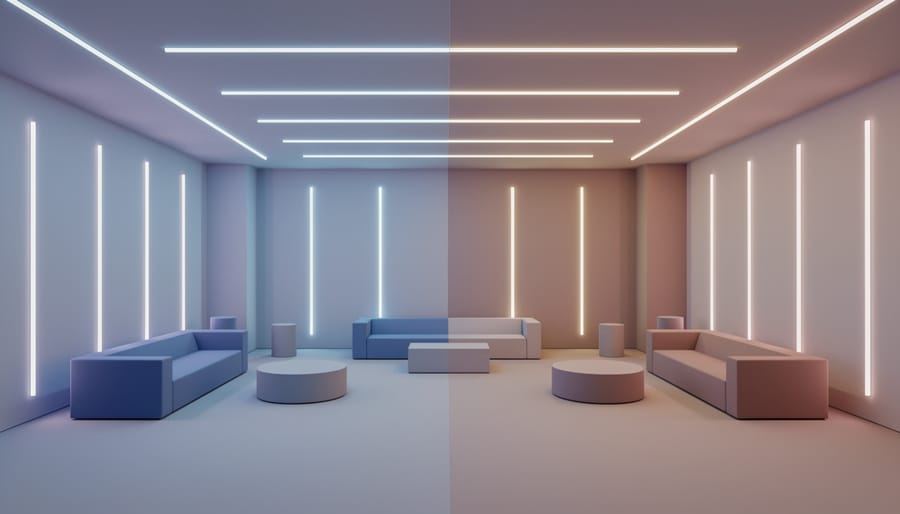
Tunable white technology represents a fundamental shift in how lighting systems support human wellbeing throughout the day. These fixtures contain multiple LED arrays that produce different color temperatures, allowing them to transition from cool, blue-enriched light in the 5000K, 6500K range to warm, amber-rich tones around 2700K, 3000K. The system automatically adjusts based on programmed schedules or manual input, creating lighting environments that align with natural daylight patterns.
The physiological impact is substantial. Cool white light in the morning suppresses melatonin production and increases alertness, making it ideal for starting the day or maintaining focus during work hours. As evening approaches, warmer color temperatures signal the body to begin its natural wind-down process. Research on light color and circadian rhythms has demonstrated how strategic color temperature management influences sleep quality and daytime performance.
Modern tunable white systems integrate with smart home platforms, enabling users to create automated transitions that mirror the sun’s natural arc. The technology requires no special switches or complex programming, most installations connect through existing control systems and adjust seamlessly based on time of day.
Applications for Residential and Commercial Spaces
Human-centric lighting transforms specific environments where people spend extended periods and need optimal conditions for rest, focus, or recovery. In residential bedrooms, tunable systems synchronize with natural sleep-wake cycles, gradually shifting to warm amber tones (2200-2700K) as evening approaches to promote melatonin production, then brightening with cooler daylight tones (5000-6500K) at dawn to support natural waking. This biological alignment improves sleep quality without requiring behavior changes.
Home offices benefit from dynamic lighting that combats the afternoon energy slump. Systems automatically increase illumination and shift toward cooler temperatures during peak work hours, maintaining alertness during video calls and detailed tasks. Programmable scenes reduce eye strain by balancing screen brightness with ambient light levels throughout the day.
Healthcare facilities represent the most critical application. Patient rooms equipped with circadian lighting support faster recovery rates and better sleep in clinical studies. Staff areas with properly timed light exposure reduce fatigue during night shifts and help maintain focus during long procedures. The technology addresses a documented problem: disrupted circadian rhythms in hospital environments delay healing and affect patient outcomes.
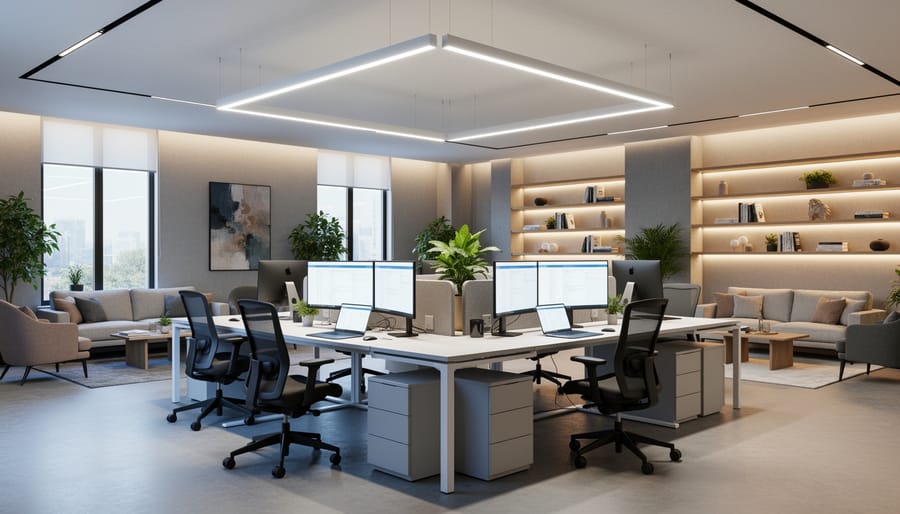
Corporate workspaces see measurable productivity gains. Conference rooms with tunable systems create energizing environments for morning strategy sessions, then shift to warmer tones for afternoon collaborative work. Open-plan offices use zoned circadian lighting to accommodate individual preferences while maintaining overall biological support across the space.
Energy-Efficient Technologies Driving Innovation
The LED lighting revolution continues to redefine energy efficiency standards in 2026, with manufacturers achieving unprecedented levels of performance that make older technologies obsolete. Today’s advanced LEDs convert over 90% of input energy directly into light, compared to incandescent bulbs that waste roughly 90% as heat. This efficiency translates into immediate cost savings and dramatically reduced environmental impact across residential and commercial installations.
Recent breakthroughs in phosphor coating formulations and chip architecture have pushed LED efficacy beyond 200 lumens per watt in some applications, while maintaining exceptional color rendering indices above 95 CRI. This means you get brilliant, accurate color reproduction that rivals natural daylight while consuming a fraction of the electricity required by halogen or fluorescent alternatives. The technology has matured to the point where LED solutions now excel in every measurable category.
| Performance Factor | Traditional Lighting | Modern LED Solutions |
|---|---|---|
| Average Lifespan | 1,000-15,000 hours | 50,000-100,000 hours |
| Energy Consumption | 60-100W per fixture | 8-15W per fixture |
| Color Rendering (CRI) | 70-85 | 90-98 |
| Dimming Capability | Limited or incompatible | Smooth 0-100% range |
| 10-Year Total Cost | $450-$800 | $120-$200 |
Beyond raw efficiency, intelligent power management systems now optimize energy use in real time. Advanced drivers monitor ambient light levels, occupancy patterns, and time-of-day schedules to deliver precisely the amount of illumination needed at any moment. Some systems can reduce power draw by 40-60% compared to always-on fixtures without compromising user experience or safety. These adaptive technologies represent the convergence of efficient LED hardware with smart control algorithms that continuously fine-tune performance based on actual usage conditions rather than theoretical maximums.
Architectural and Decorative Integration
Linear LED Systems and Continuous Lighting
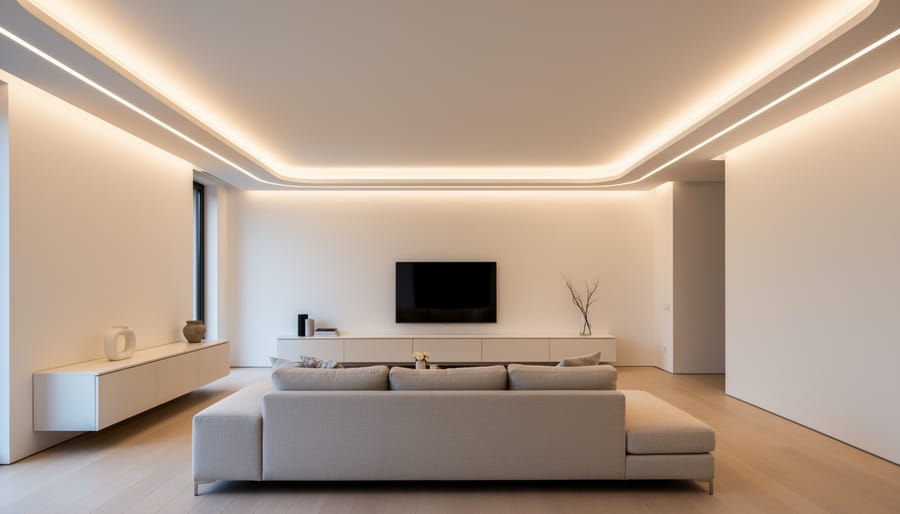
Linear LED systems deliver continuous, seamless illumination that transforms architectural features into integral design elements. Unlike traditional fixtures that create visible breaks in light distribution, these systems produce uninterrupted lines of light that follow walls, ceilings, shelves, and structural contours with precision. The result is a sophisticated visual effect that enhances spatial perception while providing functional task or ambient lighting.
These systems excel in applications where clean aesthetics matter. Recessed linear channels installed along ceiling perimeters create the illusion of floating planes and add perceived height to rooms. When integrated into stairways, the continuous light guides movement safely while highlighting architectural details. In retail and gallery settings, linear LED strips mounted above displays provide even, shadow-free illumination that showcases products without distracting hardware.
The functional advantages extend beyond appearance. Linear systems offer exceptional flexibility in length, mounting options, and light output. Many incorporate dimming capabilities and tunable white technology, allowing precise control over intensity and color temperature. For kitchen applications, under-cabinet lighting using linear LED strips eliminates dark work surfaces and creates smooth, glare-free task illumination.
Installation requires careful planning around power requirements, heat dissipation, and diffusion. Quality systems include aluminum extrusions that manage heat effectively while housing diffusers that eliminate visible LED dots, creating truly continuous light. Professional installation ensures proper alignment, consistent color temperature across runs, and integration with control systems for optimal performance.
Invisible and Minimal-Profile Fixtures
Ultra-thin and trimless fixtures represent the apex of minimalist lighting design, where illumination appears to emerge directly from architectural surfaces without interrupting visual flow. These systems achieve depths as shallow as half an inch, allowing installation in spaces where traditional recessed lighting simply won’t fit.
Trimless fixtures eliminate the visible metal rings that typically frame recessed lights. Instead, drywall or plaster finishes flush to the fixture opening, creating seamless ceiling planes where light sources nearly disappear. This approach maintains design purity in contemporary interiors while delivering focused downlighting or ambient wash effects.
Micro-profile track systems have evolved beyond bulky industrial fixtures into slender channels barely thicker than a credit card. These low-voltage systems mount directly to ceilings or walls, providing adjustable accent lighting without dominating the space visually. Their compact drivers can be hidden remotely, further reducing visible hardware.
Edge-lit panels take minimalism further by using thin acrylic or glass sheets with LED strips along the perimeter. Light enters the edge and distributes evenly across the surface, creating uniform illumination from fixtures often less than three-quarters of an inch thick. These work exceptionally well for ambient lighting in modern spaces where traditional fixtures would compete with clean architectural lines.
The key advantage? Powerful, functional lighting that respects rather than compromises architectural vision.
Dynamic and Color-Changing Capabilities
RGB and RGBW lighting systems give property owners unprecedented control over their environments through full-spectrum color manipulation. These technologies use combinations of red, green, and blue LEDs (or red, green, blue, and white in RGBW configurations) to produce millions of color variations on demand.
The distinction between RGB and RGBW matters for practical application. Standard RGB systems excel at saturated, vibrant colors, ideal for entertainment spaces, retail displays, and event venues where dramatic visual impact drives the experience. RGBW systems add a dedicated white LED channel, producing cleaner, more accurate whites and pastels that RGB alone cannot achieve without appearing washed out or tinted. This makes RGBW preferable for spaces requiring both colorful accents and quality white light for everyday tasks.
Commercial applications leverage this flexibility for brand expression and customer engagement. Restaurants shift from energizing cool tones during lunch service to warm amber hues for intimate dinner atmospheres. Retail stores highlight product displays with precise color matching that enhances merchandise appeal. Hotels program entryway lighting to reflect seasonal themes or special events, creating memorable first impressions without physical redecorating.
Residential implementations focus on lifestyle enhancement and entertainment. Home theaters use color-synchronized backlighting that extends on-screen content into the viewing space, deepening immersion. Living rooms transform from bright white work environments to soft purple relaxation zones with a single voice command. Outdoor patios adapt to holidays, parties, or quiet evenings through programmable scenes stored in control apps.
Modern RGBW controllers integrate with home automation platforms, enabling triggers based on time, occupancy, or external inputs. A connected system might automatically shift to warm red tones during sunset, transition to cool blue for focused work sessions, or pulse with music during gatherings. The technology responds instantly, no lag between command and visible change, making real-time adjustments practical rather than theoretical.
Quality matters significantly in color-changing systems. Premium fixtures maintain consistent color across their lifespan and offer smooth dimming without flicker or color shift.
Practical Considerations for Implementation
Working with Lighting Design Professionals
Professional lighting designers bring specialized expertise that transforms abstract ideas into functional, beautiful realities. They assess your space’s architectural features, natural light patterns, usage requirements, and aesthetic goals to develop comprehensive plans that address both immediate needs and future flexibility. Unlike DIY approaches that often result in unbalanced illumination or technical mismatches, professionals ensure proper fixture selection, optimal placement, and seamless integration with existing electrical infrastructure.
A skilled designer navigates complex decisions about light levels, color rendering, beam angles, and control systems that most homeowners and even contractors find overwhelming. They understand how different light sources interact, how shadows shape perception, and which technologies deliver the best performance for specific applications. This knowledge prevents costly mistakes, like purchasing incompatible smart devices or installing fixtures that create glare rather than ambiance.
Many designers now employ advanced lighting design software to visualize concepts before installation, showing you photorealistic renderings of how different fixtures, intensities, and color temperatures will transform your space. These digital tools eliminate guesswork and build confidence in your investment. Beyond technical planning, professionals maintain relationships with manufacturers and installers, often securing better pricing and ensuring proper implementation of warranty requirements. Their involvement streamlines the entire process from concept through commissioning.
Retrofitting Versus New Construction
Upgrading existing spaces with innovative lighting systems presents distinct considerations compared to integrating them during new construction. Understanding these differences helps you make informed decisions and set realistic expectations for your project.
Retrofitting offers the advantage of working within established budgets and timelines while transforming spaces you already use. Modern wireless lighting controls eliminate much of the rewiring complexity, allowing smart systems to overlay existing infrastructure without extensive demolition. However, you’ll face limitations from current electrical capacity, ceiling heights, and architectural features that weren’t designed with contemporary lighting in mind. Recessed fixtures may require modifications to accommodate insulation or structural elements, and achieving the seamless, minimalist look of integrated systems often demands creative workarounds.
New construction provides a blank canvas where innovative lighting becomes part of the foundational design. You can specify exact fixture placements, run dedicated circuits for lighting zones, and coordinate with other trades to conceal wiring within walls and ceilings before they’re closed. This approach typically delivers cleaner installations and more sophisticated control capabilities, though it requires early planning and coordination to avoid costly change orders later.
Budget allocation differs significantly between approaches. Retrofits concentrate costs on fixtures and controls, with labor for working around existing conditions. New construction distributes investment across design, rough-in electrical work, and finish installation, often resulting in lower per-fixture costs despite higher overall project expenditure.
Both paths benefit from professional consultation early in the process to identify optimal solutions within your specific constraints and objectives.
Innovative lighting and electric solutions have evolved far beyond their traditional role as mere functional necessities. Today’s advanced systems represent a sophisticated intersection where cutting-edge technology meets thoughtful design and human wellness principles. The transformation happening in residential, commercial, and hospitality environments demonstrates that lighting is no longer an afterthought, it’s a foundational element that shapes how we experience and interact with our spaces.
The systems we’ve explored, from smart controls that anticipate your needs to human-centric designs that support your natural rhythms, deliver measurable improvements in comfort, productivity, and energy efficiency. Color-tunable fixtures reduce eye strain during focused work. Architectural integration creates ambiance without visual clutter. Wireless control systems adapt instantly to changing requirements. These aren’t futuristic concepts; they’re available solutions delivering real benefits right now.
Yet achieving optimal results requires more than selecting individual components. The most successful implementations come from comprehensive planning that considers your specific activities, architectural features, budget parameters, and long-term goals. Professional lighting consultants bring the expertise to navigate technical specifications, balance competing priorities, and design cohesive systems that work seamlessly together.
Whether you’re renovating a single room, building from scratch, or upgrading an entire facility, the investment in properly designed innovative lighting pays dividends in daily experience and operational efficiency. Your space deserves lighting that enhances rather than simply illuminates, and achieving that vision starts with expert guidance tailored to your unique needs.