 donald
UVC LED disinfection uses ultraviolet-C light wavelengths (typically 260-280 nanometers) emitted by solid-state LEDs to inactivate bacteria, viruses, and other pathogens by damaging their DNA and RNA, preventing them from reproducing or causing infection.
Unlike chemical disinfectants that require contact time and leave residues, UVC LED technology offers a precise, chemical-free approach to sanitization. The technology has evolved rapidly over the past five years, moving from specialized medical and industrial settings into residential water purifiers, HVAC systems, and even portable consumer devices. For homeowners and commercial property managers alike, understanding how this technology works is essential as UVC solutions become integrated into modern spaces designed with health and safety in mind.
The effectiveness of UVC LED disinfection depends on three critical factors: wavelength precision, exposure time, and light intensity. While traditional mercury-vapor UVC lamps have been used in hospitals and laboratories for decades, LED technology provides instant on-off operation, longer lifespans (often 10,000 to 50,000 hours), and mercury-free construction. These advantages make UVC LEDs particularly suited for applications where frequent cycling is required or where environmental considerations matter.
This article breaks down the science behind UVC LED disinfection in straightforward terms, explains the components that make these systems work, and examines where this technology is most effectively applied. Whether you’re evaluating air purifiers, water treatment systems, or surface disinfection devices for your home or business, you’ll gain the knowledge needed to make informed decisions about integrating UVC LED solutions into your space.
What UVC LED Disinfection Means
UVC LED disinfection combines ultraviolet light in a specific germicidal range with energy-efficient LED technology to inactivate bacteria, viruses, and other pathogens on surfaces and in air. Unlike the UVA rays that cause tanning or the UVB rays that can burn your skin, UVC operates at a shorter wavelength, typically between 200 and 280 nanometers, that targets the genetic material inside microorganisms without penetrating deeper layers of materials or posing the same long-term risks to human tissue when properly managed.
The ‘LED’ part is crucial. Traditional UVC systems rely on mercury-vapor lamps, which are fragile, contain toxic mercury, take time to warm up, and lose effectiveness gradually. LED technology delivers UVC light instantly, in a compact solid-state package that’s more durable, easier to control, and free of hazardous materials. This makes UVC LED systems practical for residential and commercial lighting applications where reliability, safety, and design flexibility matter.
- UVC Light
- The shortest-wavelength band of ultraviolet radiation (200-280 nm), invisible to the human eye, capable of disrupting the molecular structure of microorganisms.
- Germicidal Wavelength
- The specific range of UVC light, most effectively around 260-270 nm, that damages the DNA and RNA of pathogens, preventing them from replicating or causing infection.
- LED vs. Mercury-Vapor Lamps
- LEDs produce UVC light through semiconductor chips without mercury, offering instant activation, longer lifespan, and precise wavelength control compared to older bulky mercury lamps.
- Pathogen Inactivation
- The process by which UVC exposure renders bacteria, viruses, mold spores, and other microbes non-viable by damaging their genetic code so they cannot reproduce.
What sets UVC LED disinfection apart as a lighting solution is its ability to integrate into spaces you already illuminate. Because the technology is compact and directional, designers can incorporate it into ceiling fixtures, HVAC returns, or standalone units that fit the aesthetic and functional requirements of modern interiors. You’re not installing medical equipment, you’re adding a layer of active protection that works invisibly alongside your lighting design, targeting high-touch surfaces or air circulation points where pathogens tend to accumulate. This dual-purpose approach makes UVC LED systems a practical choice for health-conscious homeowners, commercial clients, and anyone designing spaces where cleanliness and safety are priorities.
How UVC LED Technology Destroys Pathogens
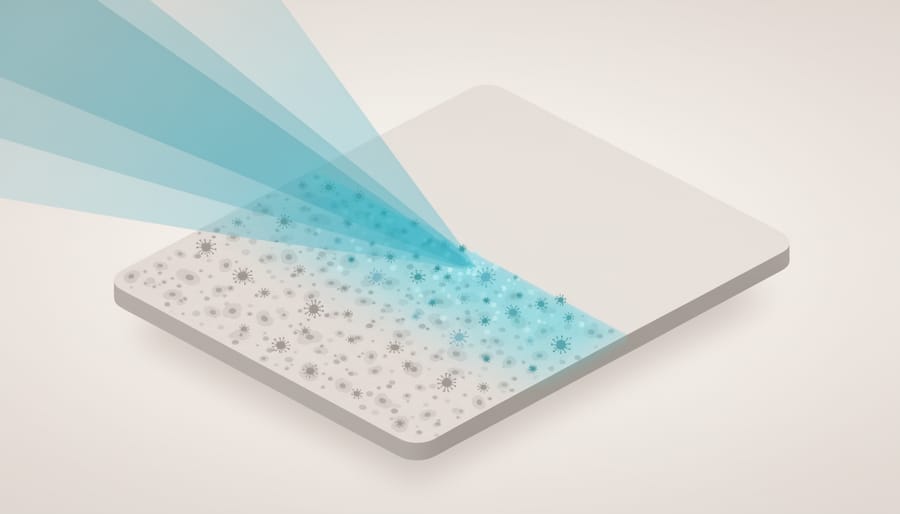
UVC LED disinfection works by delivering high-energy light that physically breaks down the genetic material inside viruses, bacteria, mold spores, and other microorganisms. When a UVC photon, a tiny packet of ultraviolet energy, strikes a pathogen, it penetrates the cell wall and enters the nucleus where DNA and RNA live. These molecules form a twisted ladder structure, and the rungs of that ladder are made of chemical bonds that hold genetic instructions together.
UVC light targets those bonds directly. The energy from photons at wavelengths between 260 and 280 nanometers causes adjacent molecules on the DNA strand to fuse incorrectly, forming what scientists call thymine dimers. Think of it as scrambling the genetic code: letters stick together in the wrong order, sentences become unreadable, and the pathogen loses its ability to copy itself or carry out basic functions. DNA damage from UV occurs at the molecular level, rendering microbes unable to reproduce or cause infection.
The process happens fast, within fractions of a second, but effectiveness depends on three interconnected factors. First, the pathogen must be directly exposed to UVC light; shadows, dust, and physical barriers block photons and create safe zones where microbes survive. Second, contact time matters. A quick flash may weaken a microorganism, but thorough inactivation requires sustained exposure measured in seconds or minutes depending on the target. Third, dosage, the product of light intensity and time, determines kill rates. Higher intensity shortens the required exposure, while lower power demands longer contact.
For designers and homeowners, this means placement and coverage are critical. A UVC LED fixture mounted on a ceiling must deliver enough photons to every surface you want disinfected, and it needs to run long enough to reach the necessary dosage. Most residential and commercial systems operate on timed cycles, running for several minutes during unoccupied periods, to ensure pathogens on countertops, doorknobs, or air handling surfaces receive a lethal dose. The LED format offers precise control over wavelength and power, making these systems predictable and repeatable compared to older mercury-vapor lamps.
Understanding this mechanism helps you evaluate products and set realistic expectations: UVC disinfection is powerful and proven, but it’s a line-of-sight technology that complements, rather than replaces, physical cleaning and filtration.
Components of a UVC LED Disinfection System
Built-In Safety Features
Modern UVC LED systems incorporate multiple layers of protection to prevent accidental exposure. Motion sensors detect room occupancy and automatically shut off UV emission when someone enters the space, resuming disinfection only after the area clears. This occupancy detection works similarly to advanced lighting controls that adjust based on presence and activity.
Most units include physical shielding or directional optics that contain UV light within the intended disinfection zone, preventing stray exposure to adjacent areas. Timer-based operation limits disinfection cycles to preset durations, reducing the risk of extended runtime during occupied hours. Many systems also feature indicator lights that signal when UV is active, giving users clear visual confirmation of operating status.
Professional-grade units add fail-safe shutoff switches, tamper alerts, and remote monitoring capabilities. These safety technologies make UVC LED disinfection practical for everyday spaces where protection must be automatic and reliable rather than dependent on manual protocols.
Types of UVC LED Disinfection Systems
UVC LED disinfection systems come in several formats, each designed for different spaces and disinfection goals. Understanding these categories helps you choose the right technology for your home, office, or commercial project.
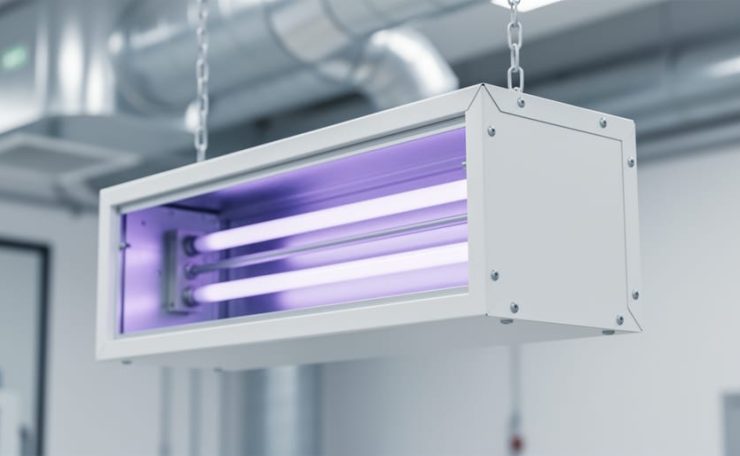
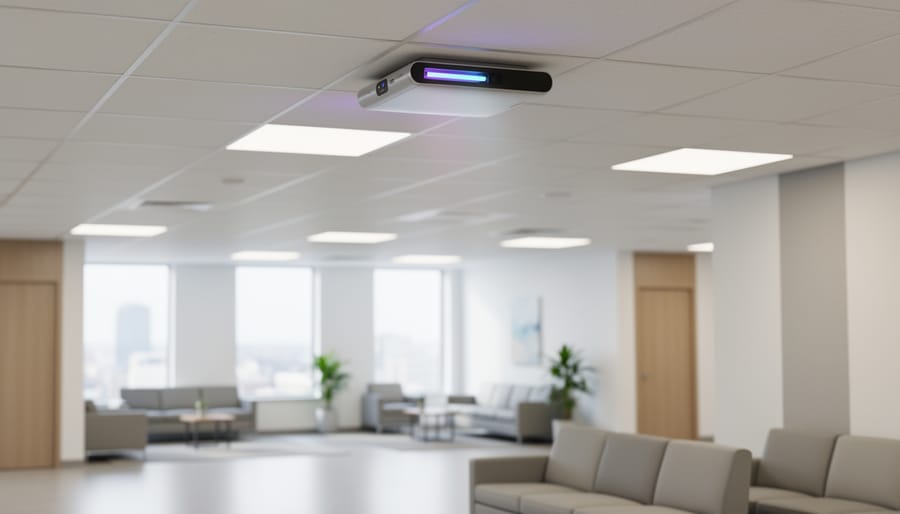
Fixed-mount ceiling and wall units are the most common installation type. These permanent fixtures mount directly to surfaces and deliver continuous or scheduled disinfection to specific areas. Ceiling-mounted systems work well in spaces where you want overhead disinfection without floor clutter, think waiting rooms, restrooms, or conference areas. Wall-mounted units suit smaller spaces like closets, entryways, or equipment storage rooms where vertical mounting saves floor space. The main advantage is set-it-and-forget-it operation. Once installed and programmed, these systems run automatically during unoccupied hours. The trade-off is that they treat one fixed area and require professional installation.
Portable UVC LED devices offer flexibility that fixed systems cannot match. These standalone units range from compact wands to rolling towers that you can move between rooms as needed. Hospitality businesses use portable systems to disinfect guest rooms between stays. Homeowners appreciate the ability to target high-touch areas like kitchen counters one day and bathroom fixtures the next. Portable devices cost less upfront than installed systems and require no wiring. However, they demand manual operation and careful positioning for effective coverage. You must physically move the device and ensure proper exposure time for each surface.
In-duct HVAC systems integrate UVC LED modules directly into your heating and cooling infrastructure. As air circulates through the ducts, it passes by the UVC emitters that inactivate airborne pathogens. This approach treats the air throughout your entire building rather than individual surfaces. Commercial buildings with existing HVAC systems benefit most from this format because installation integrates with routine ductwork modifications. The limitation is obvious: in-duct systems only disinfect air, not surfaces, so they work best as part of a layered approach.
Integrated fixture designs combine conventional lighting with UVC disinfection in a single unit. These dual-purpose systems might provide LED task lighting during occupied hours, then switch to UVC disinfection mode when the space is empty. This hybrid approach maximizes ceiling real estate and simplifies electrical planning. Interior designers favor these systems because they streamline both functional and aesthetic lighting design without adding extra fixtures.
Where UVC LED Disinfection Is Used
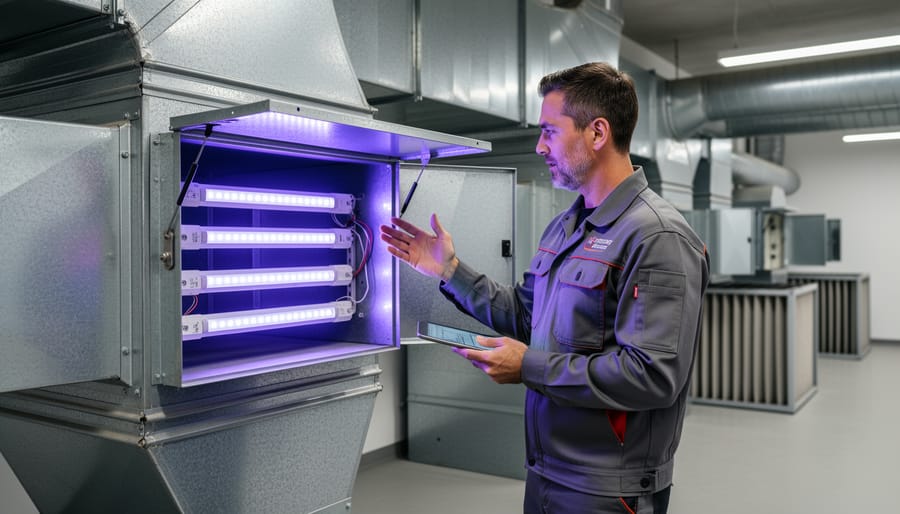
UVC LED disinfection systems appear in spaces where pathogen control matters most, both behind the scenes and in occupied areas. Healthcare facilities deploy in-duct units to treat circulating air before it reaches patient rooms, and mount wall units in procedure rooms where surfaces require frequent disinfection between appointments. Commercial offices integrate UVC into HVAC returns to reduce airborne transmission in shared conference rooms and break areas, while hospitality venues install ceiling-mounted systems in lobbies, restrooms, and food preparation zones where turnover is constant and cleanliness drives reputation.
Residential applications focus on high-touch, high-moisture zones. Homeowners seeking a healthier home often start with bathrooms, where UVC units reduce mold and bacteria on tile and fixtures, or kitchens, where countertops and cutting board storage benefit from post-meal disinfection cycles. Nurseries, mudrooms, and home gyms also suit targeted UVC treatment when occupants leave the space.
Interior designers incorporate disinfection lighting early in the planning process, selecting fixtures that match architectural finishes and wiring control systems to occupancy sensors so UVC cycles run automatically when rooms are empty. In event spaces and schools, portable units offer flexibility, roll them into a meeting room after hours, run a timed cycle, then move to the next area. Hospitality designers specify recessed UVC fixtures that activate between guest stays, maintaining brand standards without altering visible aesthetics.
Key environments where UVC LED systems deliver measurable value include:
- Healthcare waiting areas, exam rooms, and staff break rooms requiring rapid surface treatment
- Commercial kitchens and food service prep zones with stringent hygiene standards
- Hotel guest rooms, conference centers, and shared restrooms with high occupant turnover
- Educational classrooms, daycare centers, and university dormitories managing seasonal illness
- Residential bathrooms, laundry rooms, and entryways where moisture and outdoor contaminants collect
Effective placement depends on line-of-sight: UVC light disinfects only what it directly illuminates, so designers position fixtures to cover frequently touched surfaces, door handles, light switches, countertops, and avoid shadowed corners. The technology complements ambient lighting rather than replacing it, creating layered systems that address both visibility and microbial control within the same design framework.
Advantages and Limitations to Consider
UVC LED disinfection delivers measurable advantages that appeal to design professionals and property owners who value both performance and sustainability. These systems run on a fraction of the energy required by traditional mercury-vapor UVC lamps, reducing operating costs and environmental impact. The mercury-free construction eliminates hazardous material disposal concerns, an important consideration for green building projects and health-conscious clients. UVC LEDs also switch on and off instantly without warm-up periods, allowing precise, on-demand disinfection cycles that integrate smoothly into automated building controls. Their compact form factor opens design possibilities that bulky legacy systems could not accommodate, recessed ceiling fixtures, slim wall-mounted panels, and discreet integration into HVAC returns. Finally, UVC LEDs emit a narrow, targeted wavelength band optimized for germicidal action, delivering consistent disinfection without the broader spectrum output that can degrade certain materials.
That said, UVC LED disinfection has practical boundaries you need to understand before recommending it to clients or integrating it into a project. The technology works only on surfaces with direct exposure to the UVC light, shadowed areas, textured surfaces, and anything behind furniture or equipment receive no disinfection benefit. It treats surfaces, not air or embedded contaminants, which means UVC LEDs complement but do not replace mechanical filtration, ventilation improvements, or routine cleaning. Some materials, particularly certain plastics, fabrics, and dyed finishes, can degrade or discolor with prolonged UVC exposure, so material compatibility testing matters for high-design interiors. Upfront costs for quality UVC LED systems remain higher than conventional lighting, though lifecycle savings often justify the investment. When clients ask how to choose between disinfection technologies, presenting these advantages alongside their limitations builds trust and leads to solutions that truly fit the space, the budget, and the performance goals.
Common Questions About UVC LED Disinfection
Clients considering UVC LED technology often have similar questions about safety, effectiveness, and practical implementation. Here are clear answers to the most common concerns we hear during consultations.
Is UVC light safe for occupied spaces?
Direct UVC exposure is harmful to skin and eyes, which is why quality systems include motion sensors, automatic shutoffs, and shielding to prevent exposure when people are present. When properly installed and used according to manufacturer instructions, these systems operate safely.
How long does disinfection take?
Disinfection time depends on the pathogen type, distance from the light source, and system power. Most residential systems achieve effective disinfection in 10 to 30 minutes of unoccupied exposure.
Does UVC disinfection replace regular cleaning?
No. UVC light disinfects surfaces it directly reaches but doesn’t remove dirt, dust, or organic matter. Regular cleaning remains essential for maintaining hygiene and ensuring UVC light can reach surfaces effectively.
Can UVC light damage furniture or artwork?
Prolonged UVC exposure can degrade certain plastics, fabrics, and pigments over time, similar to sunlight but faster. Systems designed for occupied spaces typically use timed cycles to minimize material damage while maintaining disinfection effectiveness.
What maintenance do UVC LED systems require?
LED-based systems need periodic lens cleaning to maintain effectiveness and occasional sensor checks. Unlike mercury lamps, LEDs last 10,000 to 50,000 hours without bulb replacement, making them relatively low-maintenance.
Beyond room disinfection, UVC LED technology has expanded into specialized applications like UVC LED water sterilizers for point-of-use water treatment. Understanding these practical considerations helps you evaluate whether UVC disinfection aligns with your space’s needs and how it fits into your overall lighting design strategy.
UVC LED disinfection works by delivering precise ultraviolet light at germicidal wavelengths, disrupting the DNA and RNA of bacteria, viruses, and other pathogens to prevent replication. The technology combines proven disinfection science with the efficiency, safety, and design flexibility of modern LED systems, making it a practical addition to residential and commercial lighting plans.
As you’ve seen throughout this guide, UVC LED systems come in multiple formats, from fixed ceiling units to integrated HVAC solutions, each suited to different spaces and use cases. Understanding the components, applications, and realistic limitations helps you decide whether this technology aligns with your project goals and how to implement it effectively alongside your existing lighting design.
If you’re considering UVC disinfection for your home, office, or commercial space, the DonsBulbs team can help you evaluate options, answer specific questions about installation and compatibility, and recommend systems that fit your functional and aesthetic requirements. We bring decades of lighting expertise to emerging technologies like this one, ensuring you make informed decisions that work for your unique environment. Reach out to discuss how disinfection lighting might enhance your next project.